Reading about bed bugs online can quickly turn a worrying discovery into a sleepless night. At Mezikis, we want to put some common myths into perspective and help you work out what the signs actually mean.
Bed bugs can be treated. The useful first step is identification, followed by a plan for the affected rooms and belongings—not panic or a succession of improvised sprays.
Where can you find bed bug signs?
| Place | What to check |
|---|---|
| Mattress and bed base | Inspect seams, folds and joints for live insects, dark spotting, eggs and shed skins. See our bed bug identification guide. |
| Headboard | Inspect behind and around it where accessible. Ask for help with concealed upholstery instead of tearing it open unnecessarily. |
| Wardrobe and clothing | Keep suspect items contained and arrange suitable laundering or heat treatment according to fabric-care instructions and the treatment plan. |
| Luggage and bags | Check seams and pockets after travel. Avoid moving suspect items freely between rooms. |
| Nearby furniture | Inspect bedside furniture, sofas and other resting places, including joints and concealed gaps. |
Hot laundering and a suitable dryer can help with washable items. Delicate belongings need a different plan. Leaving a suitcase in a sunny car or putting an item briefly in a freezer does not guarantee that every part reaches an effective temperature for long enough. Discuss the method before risking damage or spreading the infestation.
Could another pest be causing the irritation?
Fleas, mosquitoes and bird mites can also cause itchy marks. Fleas may be noticed as small jumping insects, while a bird nest near a window or laundry area is a clue worth checking for bird mites. However, the shape, number or timing of skin marks alone cannot identify the pest. Medical causes of itching are also possible.
How does Mezikis treat bed bugs?
We use professional room heat treatment, which differs from applying steam directly to individual surfaces. In this early video, Dor explains the approach.
Myth: bed bugs are invisible
They are visible to the naked eye. Adults are easier to recognise; young nymphs and eggs are much smaller and can be difficult to spot. Young unfed bed bugs are pale, while feeding changes their appearance.
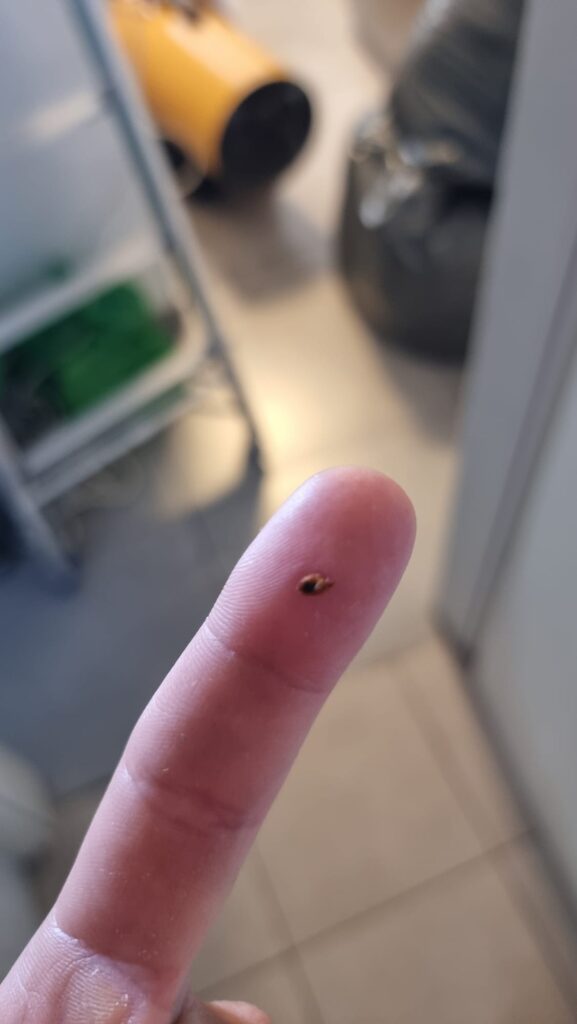
Bed bugs hide in sheltered gaps: mattress seams, the bed frame, the headboard and nearby furniture. They can also use other concealed spaces around the sleeping area. Inspect around electrical fittings only from the outside; do not open sockets or put liquids into them.
Warmth and carbon dioxide help them locate a host. Their ability to stay hidden explains why people may notice signs before finding a live insect.
Myth: bed bugs bite only at night
They commonly feed when a person is resting, often at night, but can feed at other times. Keeping the lights on is not reliable protection. A daytime sighting also does not, by itself, measure how severe the infestation is.
We have encountered heavy infestations with insects visible during the day. Those cases underline the need to inspect the whole affected area and monitor after treatment, rather than judge the problem from one sighting.
Myth: bed bugs live only in the bed
They often shelter near the person they feed on, so the mattress and bed base are useful starting points. They are not confined to the bed or to a fixed distance from it. Sofas, chairs, bedside furniture, books, curtains and cracks around the room can also provide hiding places.
Start with the sleeping and resting areas, then follow the evidence. Look for dark spotting, shed skins, eggs and live insects. Small blood marks on bedding can be another clue, although a stain alone is not conclusive.
Myth: bed bugs transmit diseases to people
Bed bugs are not known to spread diseases to people. That does not make the infestation trivial: bites can cause itching, disturbed sleep and, occasionally, allergic reactions. Scratching may damage the skin. Seek medical advice for significant or persistent symptoms. The CDC’s bed bug overview explains these health effects.
Myth: it is impossible to get rid of bed bugs
It is possible, but it requires a suitable plan. Mezikis has used heat treatment since 2017–2018. We prepare and heat the affected area using professional equipment and monitoring, aiming to treat adults, nymphs and eggs in their hiding places.
Heat is one established method; other professional methods can also form part of bed bug management. Results depend on adequate exposure, access to affected areas, preparation and follow-up. No method prevents a new introduction automatically. The EPA’s bed bug myths guide also stresses the importance of a complete strategy and monitoring.
Heard another claim you are unsure about? Contact us and describe what you found. A useful question can help both you and the next person looking for an answer.
Bed bug heat treatment prices
All prices below are before VAT. The calculation is based on the bedrooms that need treatment.
| Bedrooms requiring treatment | Price before VAT |
|---|---|
| 1 bedroom | ₪1,500 |
| 2 bedrooms | ₪2,500 |
| 3 bedrooms | ₪3,500 |
| Each additional bedroom | ₪1,000 extra |
For a hostel, hotel or other larger property, contact us to assess the rooms and scope. Our bed bug treatment includes a one-year warranty; we explain its terms and the preparation when booking. Call 054-644-33-91.
Related guides
- Bed bug treatment
- Does bleach help against bed bugs?
- Non-chemical bed bug control and prevention
- Bed bug eggs
- What do bed bugs look like?
- Understanding bed bugs
Written by Dor Levy, licensed pest controller, licence 2110. Translated from the original Hebrew guide.

The Mezikis teamOur knowledge comes from work in the field. Have a question? Let’s talk about your next step.
