Can you deal with bed bugs without immediately reaching for a spray? There are useful non-chemical measures, including careful inspection, vacuuming, suitable laundry and drying, mattress encasements and professionally managed heat. Prevention also matters: knowing how bed bugs travel can reduce the chance of bringing them home.
These measures have limits. No single household trick guarantees that an infestation is gone, and the word “natural” does not make a product harmless. This guide explains what you can do, what deserves caution and how Mezikis approaches professional treatment.
What can you do yourself?
Start by confirming the pest. Treating the wrong insect wastes time and may expose people and belongings to unnecessary products. If possible, keep a clear photograph or a securely contained specimen for identification. Our identification guide can help you understand what to look for.
| Method | How it can help | Important limitation |
|---|---|---|
| Careful vacuuming | Removes accessible bugs from seams, bed frames and nearby furniture | It may miss firmly attached eggs and hidden insects. Contain and dispose of collected material promptly; do not vacuum inside electrical equipment. |
| Targeted steam | Can treat suitable seams and surfaces when applied correctly | Heat must reach the insects. Steam can damage materials and must not be applied to electrical outlets or equipment. |
| Laundry and heated drying | Useful for suitable clothing, bedding and washable items | Follow care labels and the treatment instructions. A wash cycle alone is not a universal guarantee, and the whole load must receive adequate heat. |
| Freezing | May be suitable for some small items under controlled conditions | A few hours in a domestic freezer is not a dependable treatment. Temperature and duration need to be verified throughout the item. |
| Bed bug-proof mattress encasement | Reduces hiding places and makes inspection easier | Use a purpose-made, fully closing cover and keep it intact for the specified period. It does not remove bugs elsewhere in the room. |
| Diatomaceous earth or another desiccant product | Some products are used in bed bug management | This is still a pesticide application. Use only a locally approved product labelled for bed bugs and the intended location. Avoid airborne dust; food-grade or pool-grade powders are not substitutes. |
| Household insecticide | A correctly selected product may form part of a treatment plan | Only use a product approved for the pest and surface, exactly as labelled. An ordinary supermarket spray is not necessarily suitable or effective. |
Do not improvise room heating with domestic heaters, use flammable substances, or apply products to bedding or skin unless the label explicitly permits that use. The EPA’s bed bug control guidance explains the role and limitations of non-chemical methods.
This older video, recorded for Midrag, describes the approach we discussed in 2018. Our current service also uses professionally monitored heat, as explained below; the video should not be read as a complete description of every present-day treatment.
How to reduce the risk of bringing bed bugs home
Awareness is useful, but it cannot provide a 100% guarantee. Bed bugs travel with people and their belongings, and an introduction is not a sign that a home is dirty. They can be found in accommodation of different standards, including well-maintained hotels.
Be careful with second-hand furniture
A bed or sofa left in the street may look like a good find, but you do not know why it was discarded. Avoid bringing suspicious furniture indoors. Inspect second-hand beds, mattresses and upholstered furniture carefully before accepting them, paying attention to seams, joints and the underside.
Check accommodation before unpacking
When staying away from home, inspect the bed and nearby areas before spreading belongings over them. Keep luggage away from a potentially infested bed. If you find suspicious insects or signs, notify the accommodation staff and ask them to address the problem, including a suitable room change where necessary. Not noticing bites does not prove that the room is clear.
Think about bags and belongings returning home
Travel bags, school bags and military kit can all move between places where people sleep or sit. If you have reason to suspect exposure, inspect the items and follow suitable laundry or treatment advice before placing them on a bed. This is about the route an insect can travel, not about blaming the person carrying the bag.
Clothing can also carry bugs, particularly when it has been left close to an infestation. Keep suspected items contained while arranging appropriate treatment rather than carrying them uncovered from room to room.
Can pets bring in bed bugs?
Bed bugs behave differently from fleas. They usually hide in the environment between meals rather than living on an animal’s fur. However, they can feed on animals as well as people, and pet bedding, carriers or other belongings can transport them. An itchy cat or dog does not identify the insect responsible.

For an animal that is scratching, ask a veterinarian about the cause and suitable treatment. Do not apply a household or room-treatment pesticide to a pet. If the problem is fleas, see our flea control guide and coordinate treatment of the home with appropriate veterinary care.
The University of Minnesota’s bed bug guide describes feeding on both humans and animals and explains why skin marks alone cannot confirm an infestation.
I am worried the whole house is infested. Where should I look?
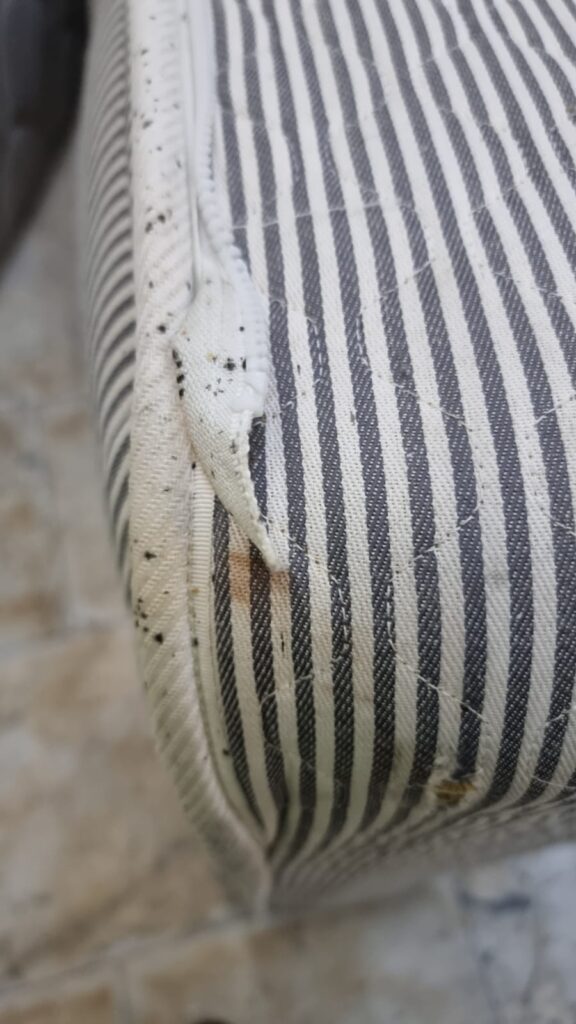
Start where people sleep or spend long periods resting. Examine mattress seams on both sides, the accessible underside and joints of the bed frame, and the front and back of the headboard. Check nearby furniture, cracks and protected edges for live bugs, pale eggs, shed skins and dark spotting.
There is no need to assume that every room is infested, but a brief inspection of one mattress cannot establish that the rest of the home is clear. The findings should guide the next steps. Do not dismantle electrical fittings or damage furniture to search for insects.
If you find evidence, arrange the handling of bedding and clothing carefully. Use suitable heat treatment or drying as instructed, follow fabric care labels, and keep treated items apart from suspected untreated items. For a more detailed inspection checklist, read how to tell if you have bed bugs.
What does Mezikis do about bed bugs?
Our treatment uses professional heating equipment and temperature monitoring to address bugs and eggs in the affected area. The aim is adequate exposure in the hiding places, not simply a high number on a heater display. Room layout, furniture, cold spots and heat-sensitive possessions all influence preparation and the process.
Our original article describes heating rooms to around 60°C with a sustained treatment period. Actual conditions must be monitored and assessed for the property; this is not an instruction to heat a room yourself or a promise that a fixed period works in every home. Targeted supplementary treatment may be used where appropriate and in accordance with the relevant product label.

Heat itself leaves no lasting barrier against a new introduction. Preparation, inspection and follow-up advice remain important. Mezikis provides a one-year warranty for bed bug treatment. Before booking, we explain the treatment scope and the instructions for your home.
Frequently asked questions
Can non-chemical measures eliminate bed bugs?
They can be important parts of an effective plan, but their success depends on reaching all affected areas and life stages. A confirmed infestation often needs professional assessment and a combination of methods rather than one household remedy.
Why do some treatments combine steam and insecticide?
Steam treats areas it can reach, while a suitably selected and correctly applied product may address other parts of the infestation. The method should be chosen for the property and pest; it is not safe to assume that any spray will work.
Are bed bugs resistant to every insecticide?
No. Resistance varies between populations and products. This is one reason professional treatment needs appropriate product selection, inspection and non-chemical measures rather than repeated use of an unsuitable spray.
Is the Mezikis service entirely chemical-free?
Heat is an important part of our approach, but supplementary targeted treatment may be included when appropriate. Ask us to explain the planned methods and any products before the appointment.
Continue with our guides to bed bug eggs, common myths and professional treatment methods. For advice or booking, call 054-644-3391 or book online.
Written by Dor Levy, licensed pest controller, licence 2110. Translated from the original Hebrew guide.

The Mezikis teamOur knowledge comes from work in the field. Have a question? Let’s talk about your next step.
