Small flies circling a fruit bowl, an open bin or the remains of a drink are often fruit flies, also called vinegar or fermentation flies. The most useful first step is to find and remove the material in which they are breeding. Catching the adults helps, but it will not solve an ongoing source by itself.
Start by checking ripe produce, cleaning food and drink residues, emptying bins and drying dirty cloths. A simple cider-vinegar trap can catch adults while you do this work. If the problem persists, Mezikis can help identify the insect and inspect the source.
How do you identify fruit flies?
The small fermentation flies discussed here are Drosophila and related household fruit flies. They are only a few millimetres long, often around 3 mm, and are much smaller than a typical house fly. Many have conspicuous reddish eyes.
Look for small flies gathering around overripe fruit, fermenting food, drink residues or organic waste. Activity can also occur near a dirty bin, a contaminated cloth or a drain with a suitable build-up. Not every small fly near a sink is a fruit fly: moth-like drain flies require a different identification.
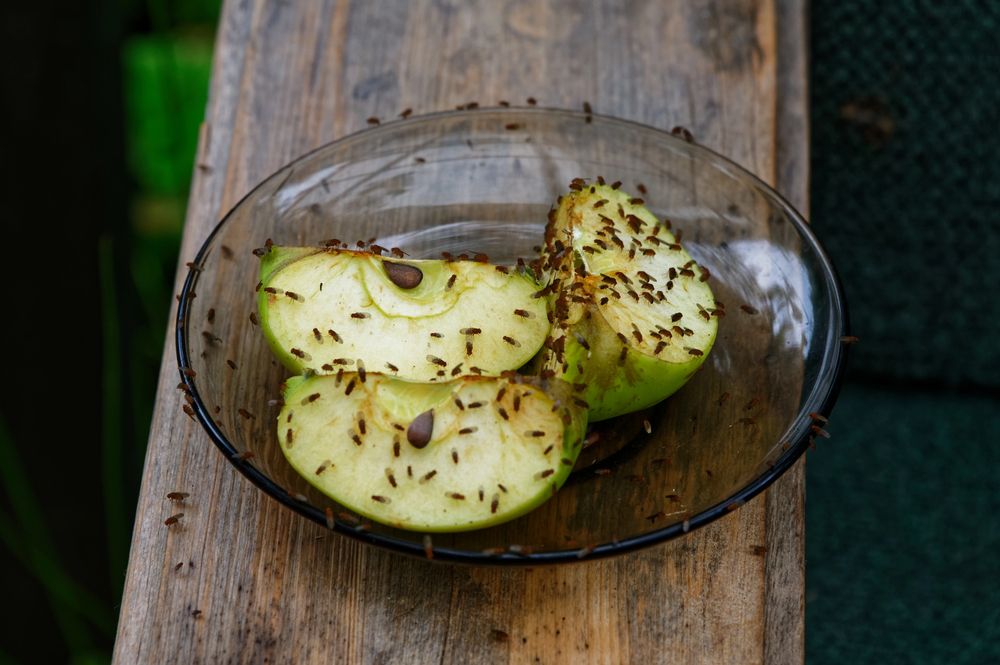
Fruit flies do not bite people, but they are unwelcome around food and can move between contaminated materials and food surfaces. Keep food protected and address the source rather than assuming that a small insect cannot create a hygiene problem.
If a garden tree has dropped fruit, collect the fallen produce before it decays. Outdoor fermenting fruit can attract large numbers of flies close to doors and windows, making the indoor problem harder to manage.
Why do ripe fruit and food residues attract them?
Fermentation produces attractive smells
As fruit and food residues break down, fermentation produces odours associated with a suitable food source. Soft bananas, damaged grapes, leftover juice, beer, wine and vinegar can all attract these flies. The process may have started before the fruit looks obviously spoiled to you.
Keeping ripe produce refrigerated where appropriate and cleaning residues promptly reduces the opportunity for this material to accumulate. Do not forget the underside of a fruit bowl or a small spill behind a bottle.
The source can support the next generation
Moist, fermenting material supplies food for developing flies as well as attracting adults. Yeasts and other microorganisms associated with decay are part of the feeding environment. Females lay eggs on suitable material, and the larvae develop there before moving to a pupation site.
Under favourable conditions, the complete life cycle can take around 8–10 days. It is not a complete egg-to-adult cycle of only 24–48 hours. This rapid development is why a small neglected source can keep producing more adults.

The University of Maryland’s fruit-fly guide describes the life cycle and emphasises removing larval food and development sites.
Five ways to clean up the source in a kitchen
- Clean relevant sinks and drains. If there is an organic build-up, remove it using an appropriate physical cleaning method or a suitable product according to its instructions. Pouring vinegar, baking soda or boiling water down a drain is not a reliable substitute for removing the material.
- Empty and clean bins. Remove organic waste regularly, close lids and clean residues on the bin itself, including the underside of the lid.
- Dry dirty, damp items. Clean and dry cloths and mops, and address accessible spills under or around appliances. Repair leaks rather than allowing contaminated moisture to remain.
- Protect ripe produce. Refrigerate suitable fruit, remove spoiled pieces and clean the container holding them.
- Maintain food-preparation areas. Wash dirty dishes promptly, wipe spills and rinse drink containers before recycling them.
Take care around electrical equipment and use cleaning products as directed. Do not mix cleaners. A small hidden residue can be more important than the clean-looking surface in the centre of the kitchen.
How to make a simple cider-vinegar trap
- Pour a small amount of apple cider vinegar into a glass or jar.
- Add a drop of washing-up liquid.
- Place it near observed activity, where children and pets cannot reach or drink it.
- Check and refresh it as needed while removing the breeding source.
The trap attracts and catches some adult flies. It does not remove eggs and larvae in an overlooked source, so continued catches should prompt a further inspection. Keep the trap separate from food and label or position it so it cannot be mistaken for a drink.
Our original Mezikis TikTok video discusses fruit flies and practical steps in Hebrew.
How does professional fruit-fly treatment work?
People often call and ask whether we have a solution for the small flies in their kitchen. We do, but the source-control work is essential. Removing fermenting material, keeping produce properly stored and cleaning relevant areas are part of the treatment plan.
We identify the fly and inspect the likely source before deciding whether a pesticide application is needed. Where appropriate, a suitable authorised product can be applied to permitted locations. This is not a blanket instruction to spray worktops, food-contact surfaces or the inside of every drain.
Tell us where activity is concentrated: above cupboards, near a bin, at a window or around a specific appliance. Those observations guide inspection. Treating the adults without removing a breeding source usually gives only a partial result.
For professional help, call 054-644-3391 or book online. If the flies look fuzzy and moth-like, compare them with our drain-fly guide.
What about herbs, essential oils and electric traps?
Basil, mint and rosemary can be pleasant plants to keep, but their presence does not establish that a fruit-fly breeding source has been controlled. The same applies to scented oils such as lavender or clove. Do not rely on a pleasant smell, scented candle or homemade spray to solve the infestation.
Electric insect traps may be useful as part of a suitable plan in a home, office, bar or restaurant. The species, room layout and position matter. An LED light source or suction mechanism does not make every device equally effective, and the trap still requires cleaning and servicing.
Choose and position devices so that food is protected. In particular, avoid electric killing grids near food-preparation areas, where insect fragments could contaminate surfaces. The University of California fly guide explains these placement precautions. Ask us about an appropriate type and location instead of buying solely on the advertised catch rate.
| Method | What it contributes |
|---|---|
| Remove fermenting residues | Addresses the material supporting breeding |
| Refrigerate suitable ripe produce | Reduces exposed attractive food |
| Clean bins and recycling | Removes hidden food and drink residues |
| Dry cleaned cloths and mops | Reduces suitable contaminated damp material |
| Cider-vinegar trap | Catches some adults and helps monitor activity |
| Suitable electric or commercial trap | Can supplement source control when correctly selected and maintained |
Frequently asked questions
Will a vinegar trap get rid of all the fruit flies?
It can catch adults, but it will not remove eggs and larvae in fermenting material. Find and remove the source while using the trap to monitor activity.
Why do fruit flies return after I clean the fruit bowl?
There may be another source, such as a bin residue, a drink container, a dirty damp cloth, fallen fruit outside or organic build-up in a relevant drain. Check the whole pattern of activity rather than only the bowl.
Does every fruit-fly problem need spraying?
No. Source removal, cleaning and appropriate storage can resolve many problems. Persistent activity calls for identification and inspection before selecting any additional treatment.
Written by Dor Levy, licensed pest controller, licence 2110. Translated from the original Hebrew guide.

The Mezikis teamOur knowledge comes from work in the field. Have a question? Let’s talk about your next step.
