At a glance: Israel has hard and soft ticks. Hard ticks have a dorsal shield; soft ticks lack it. Larvae have six legs, while nymphs and adults have eight. Feeding changes appearance, so colour alone cannot establish species or risk.
What does a tick look like?
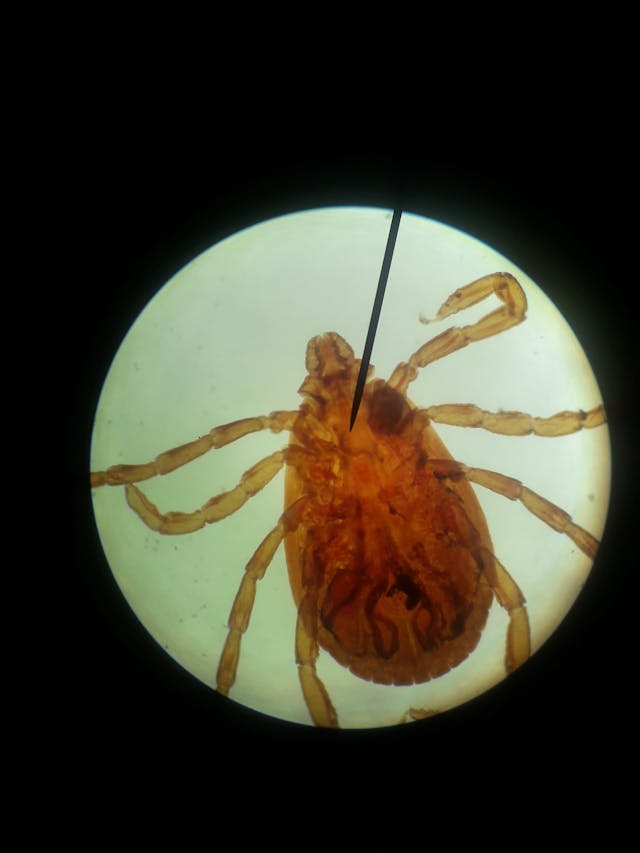
Ticks are blood-feeding arachnids, not insects. They do not jump like fleas. Look at body shape and legs and take a photograph with scale without handling the tick bare-handed. A small unfed tick can look very different after a blood meal.
| Feature | Hard ticks | Soft ticks |
|---|---|---|
| Dorsal shield | Present | Absent |
| Mouthparts seen from above | Usually project forward | Usually beneath the body in adults |
| Feeding | Generally prolonged attachment | Many species take shorter meals |
| Habitat | Various hosts and settings, including pets | Various shelters, nests and caves depending on species |
Examples in Israel
The brown dog tick is associated with dogs and can become established around buildings. Among soft ticks, the cave tick is important because of its association with relapsing fever in Israel. Other soft ticks are associated with birds; not every soft tick is a cave tick.
Finding a tick indoors does not establish which animal brought it. Inspect resting sites, access routes and the accessible surroundings.
Egg, larva, nymph and adult
| Stage | Feature |
|---|---|
| Egg | Does not bite; egg numbers and laying patterns depend on species |
| Larva | Six legs; needs a suitable host |
| Nymph | Eight legs; some species have multiple nymphal stages |
| Adult | Eight legs; structure and feeding vary |
No life stage is always the most dangerous. Risk also depends on species and infection. Not every tick carries a pathogen, and not every stage uses the same host.
Where should you look?
Inspect dog resting areas, accessible cracks and the garden according to the findings. Outdoors, reduce contact with vegetation and check the body and equipment afterwards. Ticks are not restricted to rural areas, and routine checks do not replace avoiding suspect caves.
Found a tick attached to skin?
Remove it promptly with tweezers close to the skin and steady traction, without burning or applying oil. Fever, rash or illness after exposure warrants medical advice.
Reducing recurrence
Combine appropriate veterinary prevention with maintenance and inspection of environmental activity. Do not apply environmental pesticides to animals or assume a natural spray is suitable. Repeated activity or many ticks warrants identification and a treatment plan.


Frequently asked questions
Is a tick an insect?
No. It is an arachnid. Larvae have six legs; nymphs and adults have eight.
Does every soft tick transmit cave fever?
No. Different species exist and appearance cannot establish infection.
Do ticks jump?
They do not jump like fleas. They reach hosts through contact with appropriate surroundings.
Can I identify a tick by colour?
Colour alone is insufficient. Life stage and feeding change appearance.
Further reading: flea control, tick control and green pest control.
Israeli Ministry: cave ticks · CDC: after a tick bite
Check the source, then plan the next step
Send us a clear pest photograph and describe where activity occurs. Mezikis handles the environmental infestation; a doctor or veterinarian handles symptoms and treatment of people or pets. Contact Mezikis.
After a bite, read tick exposure and when to seek medical advice. For activity at the property, see tick control.

The Mezikis teamOur knowledge comes from work in the field. Have a question? Let’s talk about your next step.
